
FSC’s termination of Amazon firm should be a warning for Peru government
Forest Stewardship Council ends company certification after indigenous rights scandal
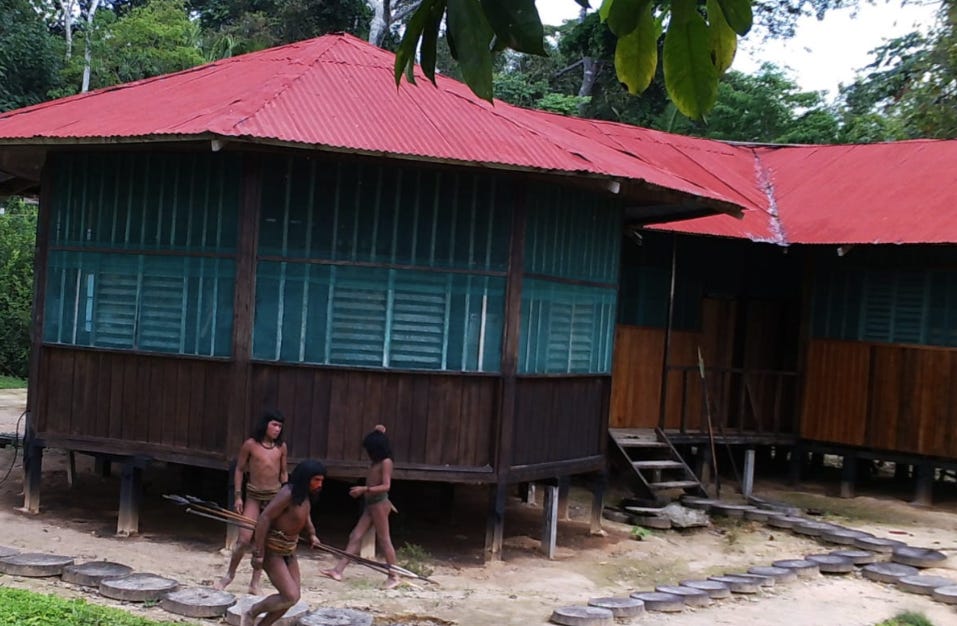
Finally, it has happened. After however many years of ignoring calls to stop certifying a little-known logging firm operating in one of the remotest parts of the Peruvian Amazon, the Forest Stewardship Council - “the world’s largest green label”, according to NGO Earthsight - has taken action. Far from being “responsibly sourced”, as the FSC claims its certification scheme guarantees, any wood coming out of that forest has meant invading the territories of indigenous people living in “isolation” and putting them at risk of contact and catastrophe.
The company, Maderera Canales Tahuamanu (MCT), a top mahogany extractor, has held its concession since 2002. It extends for more than 52,000 hectares across the Madre de Dios region, in Peru’s south-east. However, according to a proposal by indigenous federation FENAMAD in the early 2000s, all of that forest should have been included in the off-limits Madre de Dios Reserve for indigenous people in “isolation” when it was established in 2002.
But it wasn’t. Instead, it was immediately offered to the logging industry and MCT signed a contract to operate there, and then nine years later, in 2011, the FSC began certifying the company. That happened despite the FSC, headquartered in Germany, claiming to respect indigenous peoples’s rights.
Cue years of FENAMAD urging the FSC to abort certification, a bitter legal fight, violence, at least one death and all manner of critical media attention, as well as a petition from Survival International, which launched a report this week on “uncontacted peoples”, signed by almost 22,000.
The indigenous people most at risk from MCT are known most commonly as the “Mashco-Piro”, by far the largest group of people in “isolation” in Peru and possibly even the world. In a report published in July, the FSC - almost as if it was trying to draw attention to how dreadfully it has dealt with this case - spelt that name at least three other ways: “Mascho Piro”, “Mahsco Piro” and “Marscho Piro.”
After suspending MCT in August last year, and then extending that suspension in May, the FSC finally terminated the company on 2 September, according to the “Certificate Data” section of its website and a brief statement released the following day. That statement provides no explanation for its decision, saying only that it applies “with immediate effect.” When I asked for further information, I received no reply.
Of course, irrespective of the FSC, which is holding its General Assembly in Panama this week, MCT remains able to operate in its concession - and it is that, not whether its timber is certified, which threatens the indigenous people in “isolation.” What needs to happen now is obvious: Madre de Dios’s regional government and national forests agency SERFOR - whose executive director didn’t reply to my requests for comment either - must cancel or relocate MCT’s concession, as well as various other concessions to the north and south.
In addition to that, the national government - as effectively agreed in 2016 by a state-run Multi-Sector Commission - must expand the Madre de Dios Reserve eastwards so it incorporates all the forest that can be said to be the ancestral territory of the “Marscho Piro”, as the FSC might say. That is what FENAMAD and other indigenous federations such as AIDESEP, in Lima, have been demanding for years.
“It’s a positive step the FSC has ended MCT’s certification, but what is more important is the message this sends to Peru’s government,” AIDESEP’s Julio Cusurichi Palacios, author of a recent op-ed in The Guardian, tells me. “What is best for the Mashco Piro is that MCT withdraws from its concession and the reserve is expanded and properly protected. We have a new President now. If the government doesn’t take action quickly, we’ll be talking about an ethnocide.”